
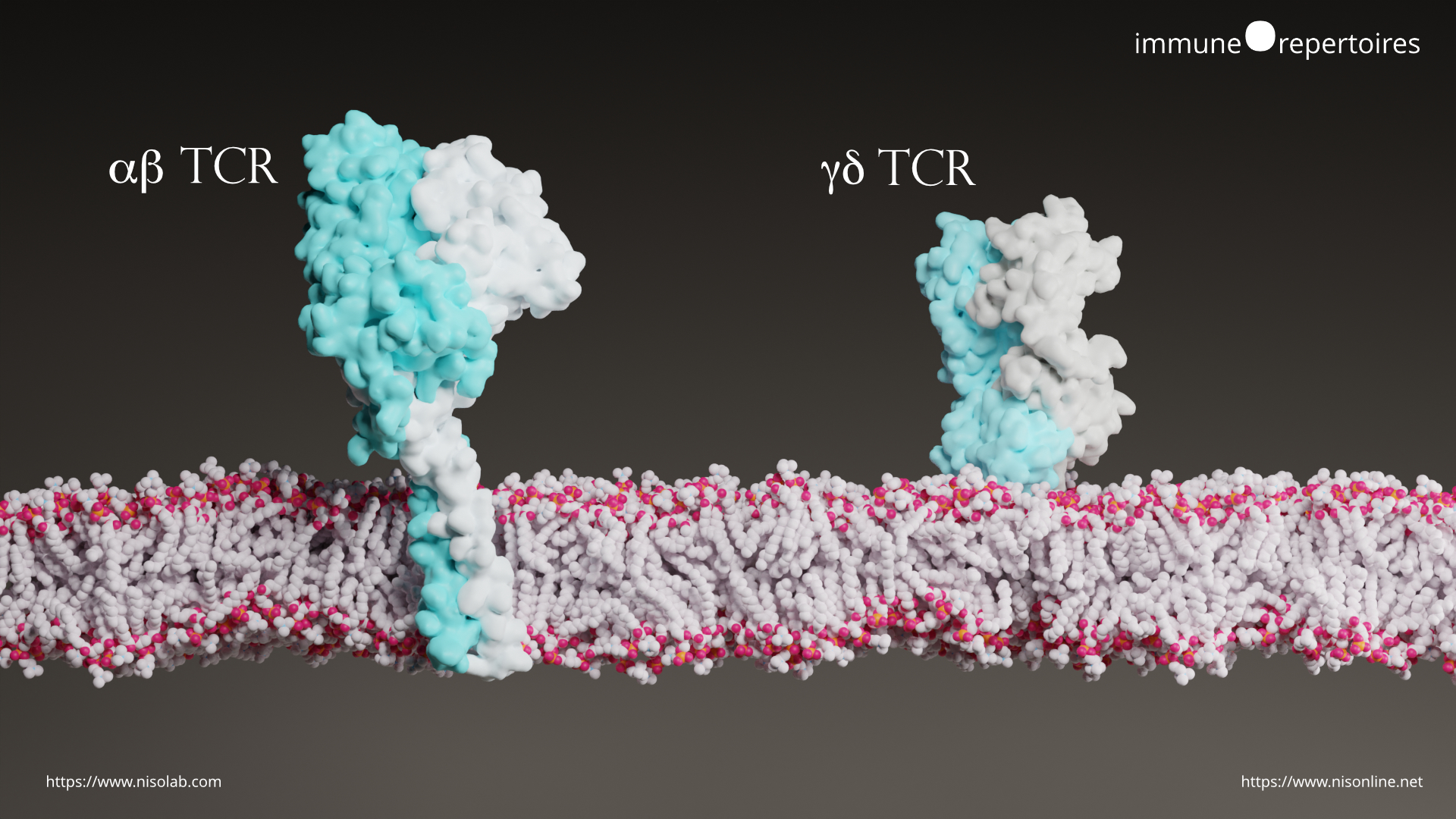
This is a a rather revolutionay finding that, although no very recent, could have crucial importance. This was described in an article published in 2020 in The Jornal of Experimental Medicine. The authors described a novel population of T cells that coexpress αβ and γδ TCRs in mice and humans. These hybrid αβ-γδ T cells arose in the murine fetal thymus by day 16 of ontogeny, underwent αβ TCR–mediated positive selection into CD4+ or CD8+ thymocytes, and constituted up to 10% of TCRδ+ cells in lymphoid organs.
They expressed high levels of IL-1R1 and IL-23R and secreted IFN-γ, IL-17, and GM-CSF in response to canonically restricted peptide antigens or stimulation with IL-1β and IL-23. Hybrid αβ-γδ T cells were transcriptomically distinct from conventional γδ T cells and displayed a hyperinflammatory phenotype enriched for chemokine receptors and homing molecules that facilitate migration to sites of inflammation.
These proinflammatory T cells promoted bacterial clearance after infection with Staphylococcus aureus and, by licensing encephalitogenic Th17 cells, played a key role in the development of autoimmune disease in the central nervous system.
Analysing single cell TCR sequencing would be a nice way to detect these "hybrid" cells. However it is very important to take into account this possibility when analysing single cell results as the general assumption is that a T cell is always αβ or γδ but never both
Reference:
(1) A population of proinflammatory T cells coexpresses αβ and γδ T cell receptors in mice and humans. J Exp Med. 2020 May 4;217(5):e20190834. doi: 10.1084/jem.20190834. https://pubmed.ncbi.nlm.nih.gov/32106283/
Picture: alpha / beta TCR with transmembrane domains and gamma / delta TCR inserted into the plasma membrane in the same cell https://nisonline.net/
Crystal structure PDB for gamma delta8JBV
Crystal structure PDB for alpha beta6JXR
ImmuneRepertoires can provide you gamma / delta , alpha / beta and single cell repertoire analysis